
Meet Environmental Activist Noa Greene-Houvras

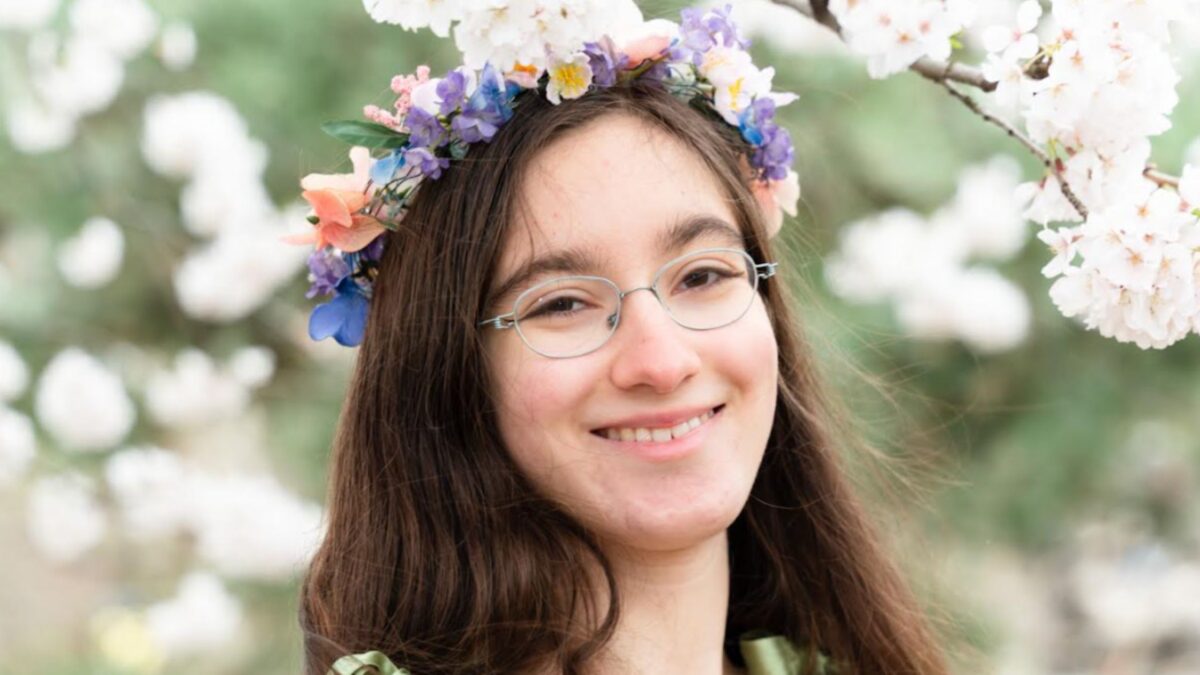
You may have seen Walter Masterson’s viral video of environmental activist Noa Greene-Houvras, who goes by @theteenagelorax on Instagram, speaking on empowering people to engage in sustainable practices, in whatever way that means for the individual, rather than shaming people into action.
Her eloquent, passionate response to Walter’s question grabbed our attention.
As we continue to build our Girls+ in Climate Tech community, we connected with Noa to learn more about her, her ideas, and her efforts in combating climate change.
Read our fascinating conversation with Noa below and please give her a follow.
What do you think is the most pressing environmental challenge that our nation faces today, and how do you believe we should address it?
Currently, I think the reliance on fossil fuels is one of the most drastic environmental problems we need to tackle. We need to establish comprehensive legislation that will decrease our reliance on fossil fuels as soon as possible. According to a recent Intergovernmental Panel on Climate Change (IPPC) report, we must stop all investments in fossil fuels since “projected CO2 emissions from existing fossil fuel infrastructure without additional abatement would exceed the remaining carbon budget for 1.5°C.” However, if I took anything away from the IPCC report, it was that there is no one isolated environmental challenge. Loss of biodiversity, food systems, fossil fuels, human rights, and health are all so interconnected that it’s almost impossible for me to pick one most pressing issues. We can’t address one symptom of climate change without addressing them all, and we can’t address the symptoms without addressing the root causes.
Have you faced any obstacles or pushback in your activism journey? How do you overcome them and stay motivated?
I’m really lucky in that, so far, there has been very little pushback against me. I don’t think this is random, I think it is the direct result of a couple of different factors. The message I am amplifying, one of urgency but also of individual and community power, is something that doesn’t threaten most people. I also have privilege in the movement as a young white woman, again making what I say more digestible to the majority of people. I’ve gotten my fair share of rude or uneducated comments on social media, but overall I’m incredibly grateful for the kindness and support most people have shown me.
As a young activist, what role do you believe young people play in driving meaningful change in the fight against climate change?
Especially when talking about the climate crisis, it is so important that we engage youth activists and amplify their voices. Youth activists are screaming for change, not out of the goodness of their hearts, but because we will live in the aftermath of today’s actions. We don’t have the privilege of giving up or not caring. At the same time, I think the climate movement has grown in its attempts to center MAPA — the Most Affected People and Areas. Although our nation’s youth will see the effects of the climate crisis eventually, there are also people around the world already feeling the impact of climate change. Islands are drowning and communities are begging for clean water and food. For these individuals, climate change is not a future issue, it is a current one. We can’t center youth activists without also centering MAPA.
What strategies do you use to effectively communicate and engage with individuals who may not be aware of or fully understand the urgency of sustainability?
Once you are fully aware of the effects of the climate crisis, it is hard to hold back, to not try and shake people awake. It is hard to not scream and yell for people to listen and change. However, one of the things I’ve learned is people don’t react to shame and fear. Very few people will be motivated into action solely from fear. Instead, they back away and give up before they start. And when you approach people with genuine conversation and understanding, they start to listen. They start to really hear what you are trying to say. I understand the desire to scream, to try and shake people out of not caring. But, as counterintuitive as it is, this approach will not get us anywhere. In general, when talking to people with different viewpoints, I stay calm, I focus on the facts, I listen to where they are coming from, and I remind myself that I can’t convince everyone. The reality is some people may continue to ignore science, and I won’t be able to sway everyone. That’s okay. It’s much more important to put our energy into policy and having discussions with decision-makers over random naysayers.
Are there any specific environmental projects or initiatives that you are currently involved in or planning to undertake in the near future? Could you tell us more about them?
Fridays for Future NYC is organizing a large-scale march to end fossil fuels on Sunday, September 17, 2023, with a large coalition of other climate justice groups. We are hoping for one of our largest turnouts yet, and the demands will focus on calling out President Biden for his hypocrisy on climate policy. This action will also coincide with the United Nations Climate Ambition Summit.
How do you see the intersectionality of environmental justice and social justice, and why is it important to address both aspects simultaneously?
The key word in this question is justice. We may be able to solve the climate crisis without social justice, but we will never achieve environmental justice without social justice. We cannot simply replace one broken system with another. The climate crisis exacerbates already existing inequalities, making the most vulnerable suffer more. A key example of this is environmental racism. Although the environment isn’t racist, communities of color are disproportionately affected by climate change. This can mean not having access to fresh food, clean air, green spaces, and comprehensive climate education. Climate justice means recognizing this disparity and achieving equity and justice in the process of stopping the climate crisis.
Looking ahead, what are your hopes and aspirations for the future, in activism, academics, and in your career?
I am a high school junior, so the college process is rapidly approaching, which is both exciting and nerve-racking. I know I want to spend my life stopping the climate crisis, but there are a lot of amazing paths to do that from. I’ve always thought I would go into science, and I intend to study biology and environmental science in college, but I could see myself using scientific knowledge in other fields as well. I love working in the climate space and I’m so excited for more opportunities in college and beyond!
What an inspiration! We are thrilled to follow Noa’s journey in climate activism and are positive she will make a profound impact.

Reader interactions
3 Replies to “Meet Environmental Activist Noa Greene-Houvras”
Comments are closed.
Thank you for your care and commitment Noa. Best of luck in helping to change and save the world.
My dear dear grand-daughter. I still remember how you looked down the two divided streets in Boston when you were three years old.
Like Robert Frosts poem, “The road less traveled by.”
Now you are on a new road that hopefully will inspire all the people on our earth mother to stop polluting our air. Who knows how long it will take for everyone to
Wake up and March down the correct path.
Let me say have humans learned one simple rule from the beginning of time?
“Tho shalt not kill”?
No so maybe one day, the new day will arrive when all weapons of destruction are gone. And freedom and clean air and a long life for all will prevail.
I was absolutely amazed when I came across her on Walter Masterson’s Instagram feed. I’m a photographer and short film maker and am in the process of making a short film that addresses the climate crisis. I hope to share more about that in the near future.
It’s an inspiration to see someone being so erudite, and yet clear and simple in her thoughts and ideas. This website is great. I’m very happy to have come across it.