
Thank You for Joining Our Community

The Salaries in Climate Change Survey was made possible with the guidance of social sciences Professor Paul Whiteley of Essex University. Thanks to the respondents who made this our largest survey to date.
We welcome your comments, observations, and questions. Please post them to our Women+ in Climate Tech Global Network LinkedIn Page; we will respond to the best of our ability and knowledge!
This salary information is made available only to our email subscribers. We would love you to share the newsletter subscription link (subscribing is free) with your networks so others can benefit from this data. Thank you.
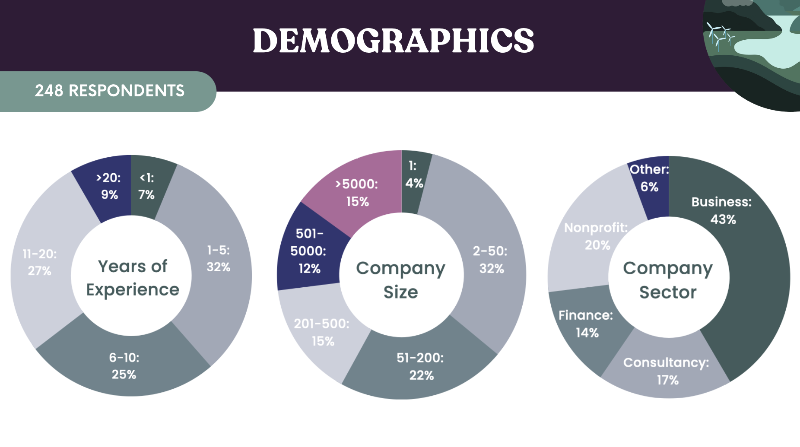
Survey respondents came from sectors and companies of various sizes. They were also relatively evenly distributed in terms of years of experience.

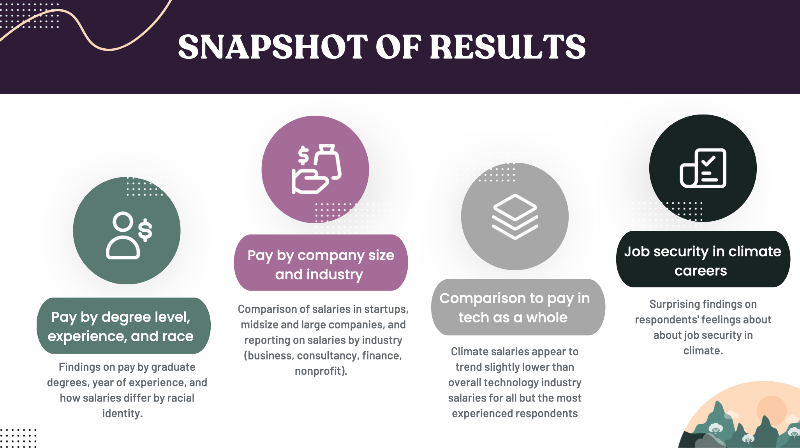
Respondents with master’s degrees command the highest salaries, and years of experience directly correlates to salary level. In addition, the gap between average salaries of respondents who identify as white versus those who identify as people of color is $21,000.

Pay disparity between respondents identifying as white and those who identified as a person of color does not appear to be explained by years of experience. Nor can the pay disparity be explained by the presence or absence of graduate degrees (a higher percentage of people of color reported having master’s degrees—63% vs. 49%).
This topic warrants more discussion than is possible in one newsletter; we welcome comments and thought leadership from members of our network with lived experience and expertise vis-a-vis solutions on our LinkedIn page.
Suffice it to say: Women+ in Climate Tech’s position is that climate tech cannot be effective if the change our field promulgates is selective and to the detriment of communities that are marginalized. Tackling the greatest challenge of our time means upending systemic problems that got us here. If this data is truly representative of our industry, climate tech is missing the boat and a golden opportunity to lead true change.

Respondents in finance commanded far higher salaries, and salaries are directly correlated to company size, leaving startups disadvantaged when it comes to retaining talent. (Our survey did not account for equity considerations, something we hope to explore in future surveys!)

For the purposes of comparison, we took a look at surveys of the tech industry as a whole. Here is one we reviewed to create the graphic above.
Admittedly, our field straddles many sectors (IT, sustainability, environmental), so an apples-to-apples comparison is not possible. However, it appears that average salaries in tech as a whole trend higher than in climate tech for all except for those with the most years’ experience. As climate tech seeks to recruit and re-train workers from IT sectors, keeping pace will be important.
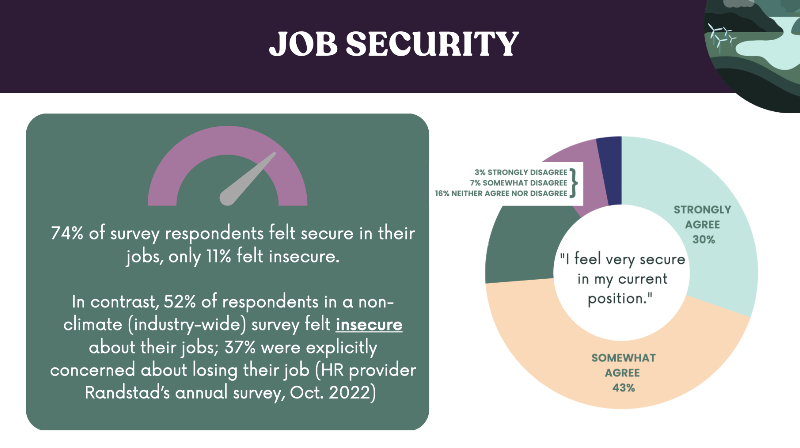
On a bright note, our respondents felt very positive about their job security. This data correlated with company size—those who had roles in larger companies felt more secure than those who are with smaller companies. However, overall feelings of job security in climate tech trend far higher than in other industries.